
Among Sensex firms, Mahindra & Mahindra, Asian Paints, Infosys, Titan, Sun Pharma, Tata Consultancy Services, Tech Mahindra and Power Grid were the major laggards. However, Bajaj Finance, Eternal, UltraTech Cement and Reliance Industries were among the gainers.

The Centre on Wednesday increased the Dearness Allowance (DA) by 3 percentage points effective from July 1 this year, benefitting more than 1 crore employees and pensioners ahead of the Diwali festival. The Union Cabinet has approved to increase Dearness Allowance (DA) to central government employees and Dearness Relief (DR) to pensioners by three percentage points of the basic pay/pension ahead of Diwali, Union Minister Ashwini Vaishnaw said after the Cabinet meeting.

Retail inflation eased to a one-year low of 4.75 per cent in May as prices of some kitchen items declined marginally, according to government data released on Wednesday. The Consumer Price Index (CPI) based retail inflation was 4.83 per cent in April 2024 and 4.31 per cent in May 2023 (previous low).

Stock markets will be driven by further developments on the US-China tariff war front along with quarterly earnings announcements from IT majors Wipro and Infosys in a holiday-shortened week, analysts said. Global market trends and trading activity of foreign investors would also dictate market movement this week, experts noted.

Soaring vegetable prices pushed the retail inflation rate to a nine-month high of 5.49 pr cent in September, according to government data released on Monday. The consumer price index (CPI)-based retail inflation rate was 3.65 per cent in August and 5.02 per in September 2023. The previous high inflation rate was witnessed in December 2023 at 5.69 per cent.

Among Sensex firms, Maruti zoomed the most by 8.94 per cent. Bajaj Finance rallied over 5 per cent, UltraTech Cement by 3.71 per cent, and Bajaj Finserv by 3.7 per cent. Mahindra & Mahindra, Hindustan Unilever and Trent were also among the gainers. However, ITC was the biggest loser, dropping by 1.26 per cent. Eternal, Tech Mahindra and Larsen & Toubro also declined.

Wholesale inflation rate declined marginally to 0.2 per cent in February compared to 0.27 per cent in the preceding month despite a slight uptick in the food basket. The Wholesale Price Index (WPI)-based inflation was in the negative zone from April to October and had turned positive in November at 0.26 per cent. The inflation in February 2023 was 3.85 per cent.

Wholesale price-based inflation rate fell to a 3-year low of (-) 3.48 per cent in May on easing prices of food, fuel and manufactured items, strengthening the case for continuing with the pause in rate hike in the coming months of the current fiscal. This is the second straight month when WPI has been in the negative zone mainly on account of a higher base and falling prices of fuel and manufactured goods. Food prices also eased during May. In May, 2022 WPI inflation was at 16.63 per cent. Last month, it was (-) 0.92 per cent.

'Challenge is basically near-term growth as the outlook has turned a bit adverse.'

In an eventful week ahead, stock markets may face volatile trends before the RBI's interest rate decision and the US inflation data announcements, as investors continue to assess the broader implications of US tariffs on global economy and inflation, analysts said. Investors fear that a full-blown trade war will impact global trade and economic growth, according to market experts.

Among Sensex firms, Eternal, Infosys, Asian Paints, HDFC Bank, Bajaj Finserv and Titan were the major gainers. However, Tata Steel, Tech Mahindra, Adani Ports and Bharat Electronics were among the laggards.

The retail inflation eased to a four-month low of 4.87 per cent in October, mainly due to cooling prices of food items, government data showed on Monday. The Consumer Price Index (CPI) based retail inflation fell to a three-month low of 5.02 per cent in September. The previous low inflation was recorded at 4.87 per cent in June.

The central bank is widely expected to increase the repo rate by 25 basis points on Tuesday to 7.75 per cent to fight inflation even as it continues to unwind its rupee defense steps, a Reuters poll showed.
Retail inflation eased to 7.04 per cent in May, mainly on account of softening food and fuel prices as the government as well as the RBI stepped in to control spiralling price rise by way of duty cuts and repo rate hike. However, the inflation print stayed above the Reserve Bank's upper tolerance level of 6 per cent for the fifth month in a row. The Consumer Price Index (CPI) based retail inflation was 7.79 per cent in April.

In a data-packed week, the domestic macroeconomic figures -- industrial production and inflation numbers -- along with global trends would dictate trends in the equity market this week, analysts said. According to experts, markets may face volatile trends due to high valuations. Equity benchmark indices Sensex and Nifty hit their fresh record peaks on Thursday. Besides, trading activity of foreign investors, movement of global oil benchmark Brent crude and rupee-dollar trend would also influence trading in equities.

Retail inflation eased to a nearly six-year low of 3.16 per cent in April mainly due to subdued prices of vegetables, fruits, pulses, and other protein-rich items, creating enough room for the Reserve Bank to go for another round of rate cut in the June monetary policy review. The Consumer Price Index (CPI) based inflation was 3.34 per cent in March and 4.83 per cent in April 2024. It was 3.15 per cent in July 2019.

Gold and silver prices are expected to maintain their upward trajectory this week, but may see late profit-booking amid the release of a series of crucial global economic indicators, analysts said. On the economic front, traders will closely monitor the manufacturing/ services PMI data from across regions and the US non-farm payrolls/ employment data along with consumer confidence for the month of September and speeches from several Federal Reserve officials, they added.

The rate of price rise for food articles stood at 11.51 per cent during January as against 2.41 per cent a month earlier, while for non-food articles it rose nearly three-fold to 7.8 per cent from 2.32 per cent in December, the data released by the ministry of commerce and industry on Friday showed.

How is it that tomatoes recorded a price fall in official statistics when it remained unaffordable for the common person in June?

Quarterly earnings of corporates, trading activity of foreign investors and inflation data are the key factors that are expected to drive the momentum in the equity markets this week, analysts said.

Multiple tailwinds for the automobile sector, including a cut in goods and services tax (GST) rates, are keeping analysts bullish on auto stocks from a long-term perspective, even as they see the rally running its course in the near term.

Shares of Oil marketing companies (OMCs) extended their gains for the fourth consecutive session on Thursday after crude oil prices plunged to six-month lows in the international markets, which boosted investor sentiments. Traders said the OMC stocks gained with crude oil prices hovering below $70 per barrel after OPEC-plus decision to increase output from April, a move which is expected to favour Indian refiners with added marketing margins on retail fuel.
The wholesale price index (WPI)-based inflation rose in December at 0.73 per cent mainly due to a sharp rise in food prices. The WPI inflation was in the negative zone from April to October and had turned positive in November at 0.26 per cent.

The Model Code of Conduct for the ongoing Lok Sabha elections has come in the way of release of routine economic data like the consumer price indices.

Global funds' assets under custody (AUC) in India have been flat this year, with a Rs 2 trillion drop in information technology (IT) holdings offset by gains in financial stocks. AUC is the total market value of equities held by FPIs.
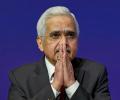
Outgoing Reserve Bank Governor Shaktikanta Das said on Tuesday that restoring inflation-growth balance is the most important task ahead of the central bank. Addressing a press conference on his last day as the central bank chief, Das said his successor will have to navigate the changing world order, effectively deal with cyber threats, and focus on harnessing new technologies.

India's headline retail inflation is expected to moderate further in the months to come, as low wholesale inflation will transmit to consumer prices, the Ministry of Finance said in its latest monthly economic review (MER) on Monday. "Inflationary pressures eased in February, with slight moderation in Consumer Price Index (CPI) inflation and Wholesale Price Index (WPI) inflation softening to a 25-month low. "With WPI inflation easing, its transmission to CPI inflation is soon expected," the MER for February said.
Retail inflation declined to a three-month low of 5.02 in September, mainly due to easing food prices, according to the government data released on Thursday. The inflation has come back to the Reserve Bank's comfort level of below 6 per cent after a gap of two months. The inflation based on the consumer price index (CPI) was 6.83 per cent in August and 7.41 per cent in September 2022.

The Reserve Bank of India's (RBI's) caution on inflation, highlighted during the recent monetary policy meeting, may put investors' faith in fast moving consumer goods (FMCG) stocks to test, analysts said. They, however, believe FMCG stocks may ride through this near-term investor anxiety as related companies are, typically, well-equipped to handle inflation due to their pricing power and steady demand for essential goods.

Consumer price-based inflation jumped to 6.95 per cent in March, mainly on account of costlier food items, according to government data released on Tuesday. The Consumer Price Index (CPI) based inflation was 6.07 per cent in February.

Retail inflation in March inched up to 8.31 per cent from 8.03 in February, mainly on account of a rise in fruit and vegetable prices.

The Indian services sector growth touched a ten-month high in June aided by robust expansion in international sales and job creation, amid positive demand trends and ongoing improvement in sales, a monthly survey said on Thursday. The seasonally adjusted HSBC India Services PMI Business Activity Index rose from 58.8 in May to 60.4 in June, driven by sharp upturn in new business orders.

This adjustment is aimed at helping workers cope with the rising cost of living, a labour ministry statement said.

The wholesale price index-based inflation remained in the negative territory for the seventh straight month in October at (-) 0.52 per cent, on easing prices of food items. The WPI-based inflation rate has been in the negative zone since April and was at (-) 0.26 per cent in September, 2023. In October last year, WPI was at 8.67 per cent.

Among Sensex firms, Tata Consultancy Services, Adani Ports, Hindustan Unilever, Nestle, Bajaj Finserv and NTPC were the laggards. IndusInd Bank, Titan, Mahindra & Mahindra and Maruti were among the biggest gainers.
The wholesale price-based inflation bucked the 4-month rising trend in December 2021, and eased to 13.56 per cent, mainly on account of softening in fuel, power and manufacturing items even though food prices hardened. WPI inflation has remained in double digits for the ninth consecutive month beginning April. Inflation in November was 14.23 per cent, while in December 2020 it was 1.95 per cent.

The wholesale price index-based inflation remained in the negative territory for the sixth straight month in September at (-)0.26 per cent, on easing prices of food articles. The WPI-based inflation rate has been in the negative since April and was (-)0.52 per cent in August. In September last year, it was 10.55 per cent.
Vegetable prices recorded the maximum spurt in prices, up 24.55 per cent, followed by edible oils -- 17.63 per cent and milk products -- 14.94 per cent in April, year-on-year basis.
The inflation figures are based on data collected from limited markets in view of the restrictions imposed on account of coronavirus pandemic.

Foreign investors have made a strong comeback to Indian equities with a net investment of Rs 22,766 crore in the first two weeks of December driven by expectations of rate cut by the US Federal Reserve. This revival follows significant outflows in the preceding months, with Foreign Portfolio Investors (FPIs) pulling out a net Rs 21,612 crore in November and a massive Rs 94,017 crore in October -- the worst monthly outflow on record.
 © 2026 Rediff.com - Advertise with us - Disclaimer - Privacy Policy - Sitemap - Feedback - About us - Terms of use - Grievances